Flying Crane Embroidery Design Review
First Impressions: Elegant, Timeless, and Highly Versatile
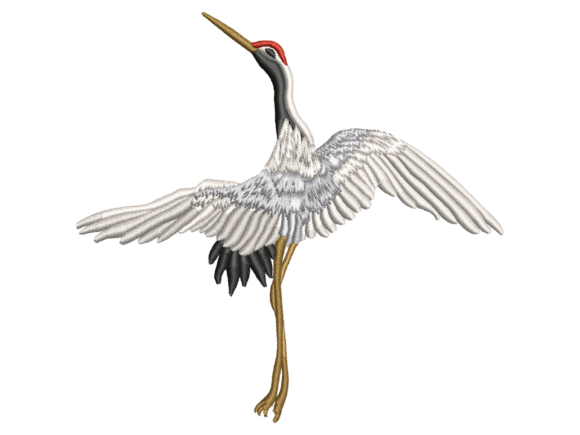
As an embroidery designer preparing for a weekend craft fair, the Flying Crane Embroidery Design immediately stands out. The name alone suggests grace and motion, and the visual impression matches that expectation. It reads as elegant, slightly minimalist, and has a soft decorative quality that could appeal to a variety of handmade product buyers—from boutique owners to Etsy sellers. It’s not overly cute or cartoonish, nor is it too formal. Instead, it feels balanced—modern enough to feel fresh, yet classic enough to remain appealing across seasons.
Best Products to Showcase Flying Crane Embroidery Design
This design works especially well as a focal point rather than a background accent. Here’s how it performs across common craft fair items:
- Tote bags – Perfect for the center panel or near the top hem, where it can be seen easily. The crane’s wingspan gives a nice visual flow that complements the vertical space of a tote.
- Aprons – Ideal for the chest or pocket area. It adds a premium handmade touch without overwhelming the garment.
- Tea towels – Positioned near the corner or along the hem, it enhances the kitchen décor vibe without competing with the fabric pattern.
- Caps – Works best on the side or back panels where there’s more space to accommodate the design’s height and detail.
- Embroidered patches – Can be scaled down slightly for a subtle yet elegant embellishment on jackets or bags.
- Pillow covers – Placed centrally or off to one side, it brings a decorative yet understated elegance.
- Small pouches – Best used when scaled appropriately to avoid losing detail on curved or small surfaces.
Visual Appeal and Booth Display Strength
The Flying Crane Embroidery Design has strong visual appeal, especially in person. It catches the eye with its clean lines and flowing shape, making it a great conversation starter at a craft fair booth. It reads as handmade quality with a hint of premium finish, which can help justify higher price points for small shop products. When arranged on a display table with other similarly styled designs, it contributes to a cohesive and professional booth aesthetic.
Photography and Online Listings
For Etsy sellers or digital sellers using printable mockups, this design photographs beautifully. The crane’s silhouette is distinct and recognizable, even in thumbnail sizes. It holds up well in lifestyle shots—especially when styled with natural backdrops or minimalist décor. That makes it ideal for online product listings, where clarity and immediate visual recognition are key.
Batch Production and Practicality
One of the biggest selling points for this design is its repeatability. Once you’ve tested the stitch density and thread colors, it’s straightforward to reproduce across multiple items. It’s not overly complex, so it stitches out consistently on mid-range embroidery machines. That makes it a smart choice for craft fair sellers looking to create a line of coordinated products quickly and efficiently.
Careful-Use Notes for Embroidery Crafters
While the Flying Crane Embroidery Design is generally user-friendly, there are a few practical considerations to keep in mind:
- Dense stitch areas – Check for overly tight stitching in the wings or tail feathers. These may require extra stabilizer support, especially on thinner fabrics.
- Small details – The crane’s eye or wingtips may be delicate. Test on scrap fabric before production.
- Dark fabric – Consider thread contrast carefully. Light-colored threads on dark backgrounds can make the design pop, but may also highlight minor stitch imperfections.
- Textured towels – Use appropriate stabilizers and test tension to avoid distortion on thick or looped fabric surfaces.
- Curved cap surfaces – Be mindful of distortion when stitching on rounded areas. Adjust hoop placement and stabilize accordingly.
- Smaller scales – Avoid shrinking the design too much, as it may lose clarity and appear muddy.
Designer Tips Before Production
Before turning this into a full line of handmade products, I recommend the following:
- Test on scrap fabric – Always do a test stitch-out to check tension, spacing, and clarity.
- Check thread contrast – Choose thread colors that highlight the crane’s shape without blending into the fabric.
- Review spacing – Ensure the design doesn’t crowd other elements on the product.
- Confirm hoop size – Match the hoop to the design dimensions to avoid unnecessary resizing.
- Inspect stitch density – Adjust if needed for fabric type or machine capabilities.
- Use the right stabilizer – Especially for thick or textured materials like tea towels or denim.
- Create a real mockup – Don’t rely solely on digital previews. A physical sample helps catch issues early.
- Compare fabric colors – Try the design on light, medium, and dark backgrounds to see which gives the best visual impact.
- Confirm commercial licensing – Since this is a digital embroidery file, make sure it’s cleared for resale before offering finished products.
Final Thoughts: A Strong Addition to Any Craft Fair Line
The Flying Crane Embroidery Design is a solid investment for embroidery business owners, boutique makers, and creative entrepreneurs. It brings together elegance, simplicity, and versatility—making it suitable for a wide range of craft fair products. Whether you’re selling embroidered tote bags, pillow covers, or aprons, this design elevates your offerings and supports a cohesive, professional brand image. Just remember to test thoroughly, choose your materials wisely, and ensure your stitch settings are dialed in before production. Done right, this design can be a real standout in your handmade lineup.